Red Bull doesn't sponsor sport. It manufactures it.
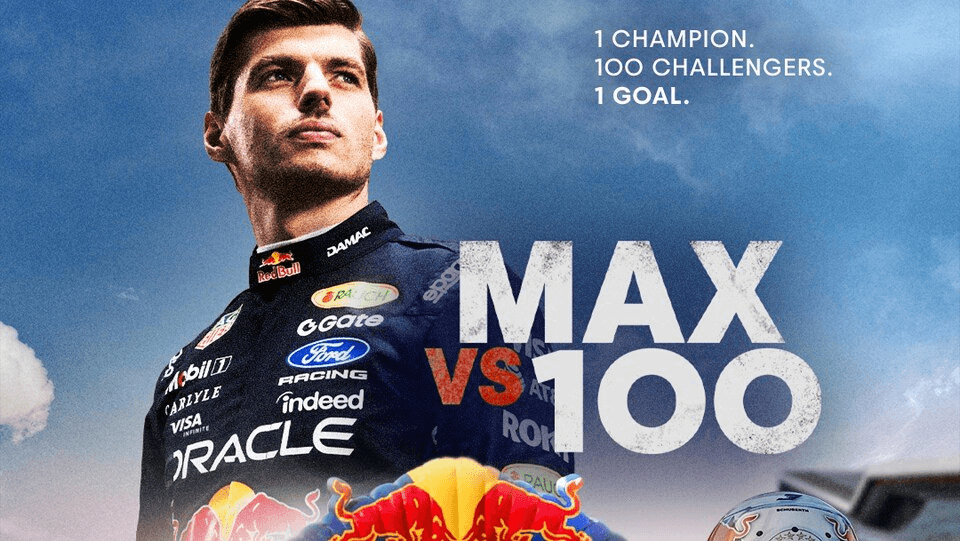
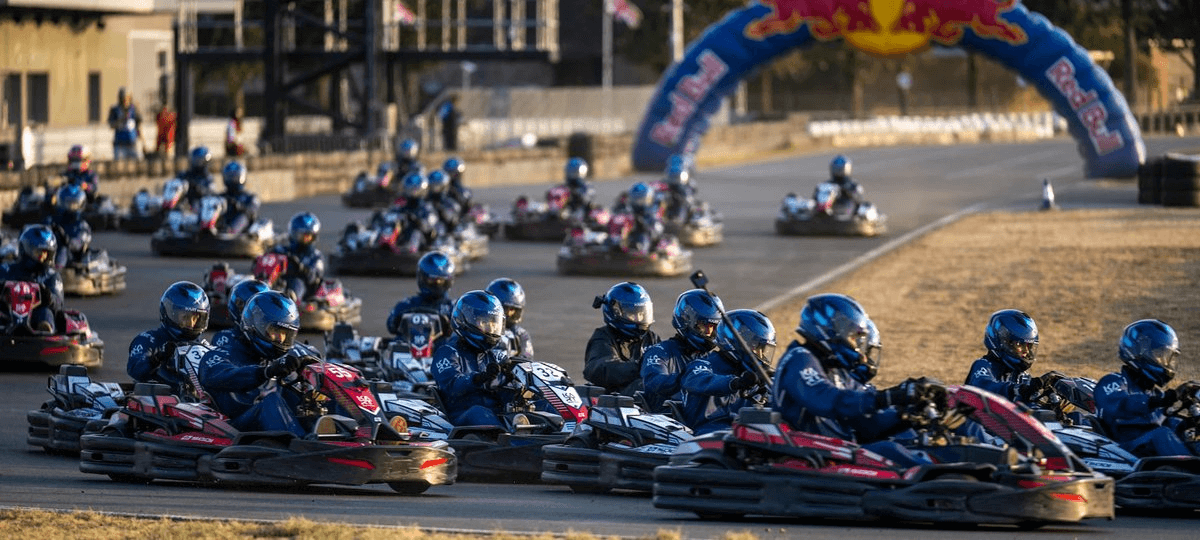
Max Verstappen started last on a grid of 101 karts at Silverstone. Behind the race is a lesson in what it means to build a brand narrative for twenty years.
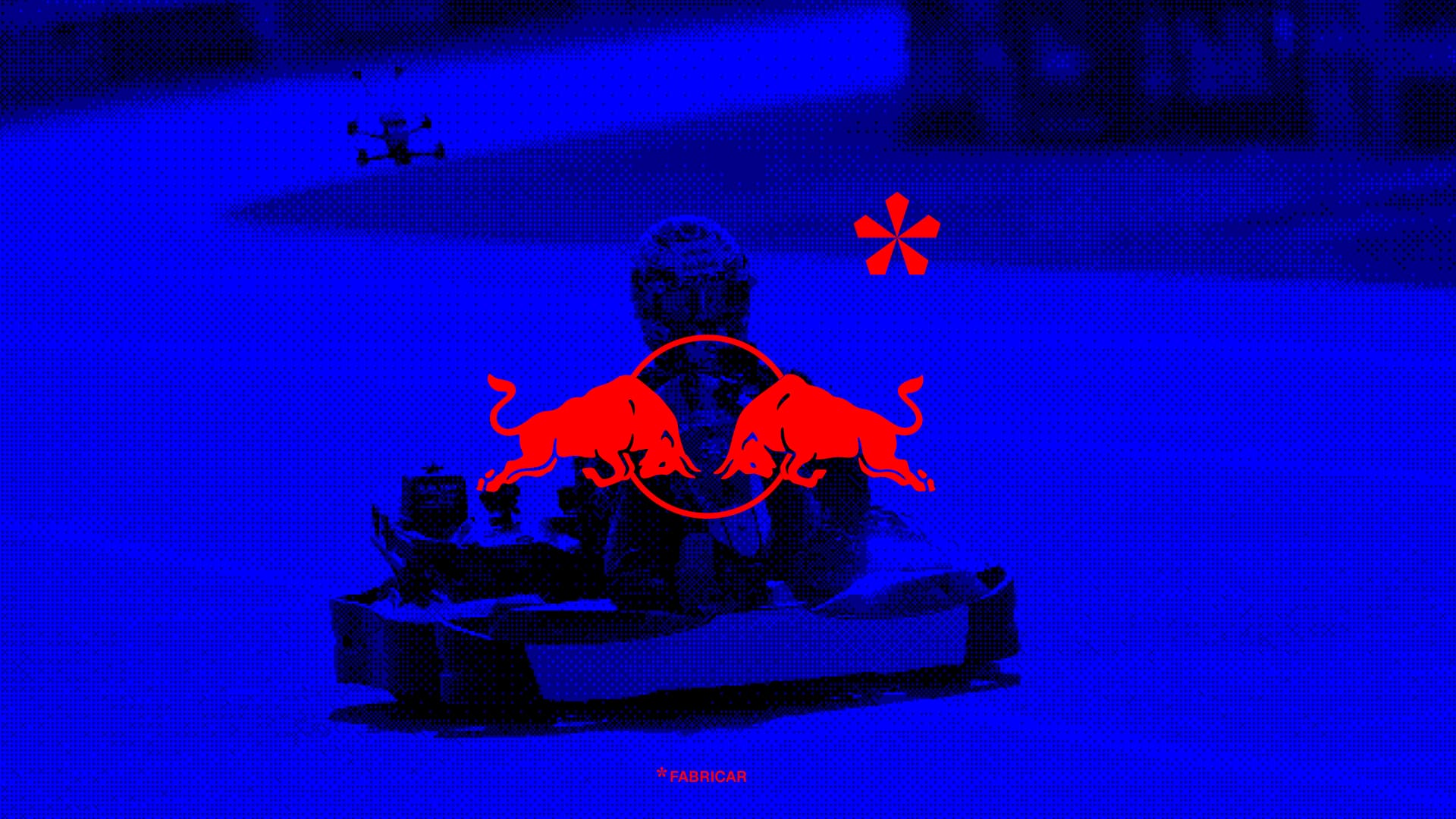
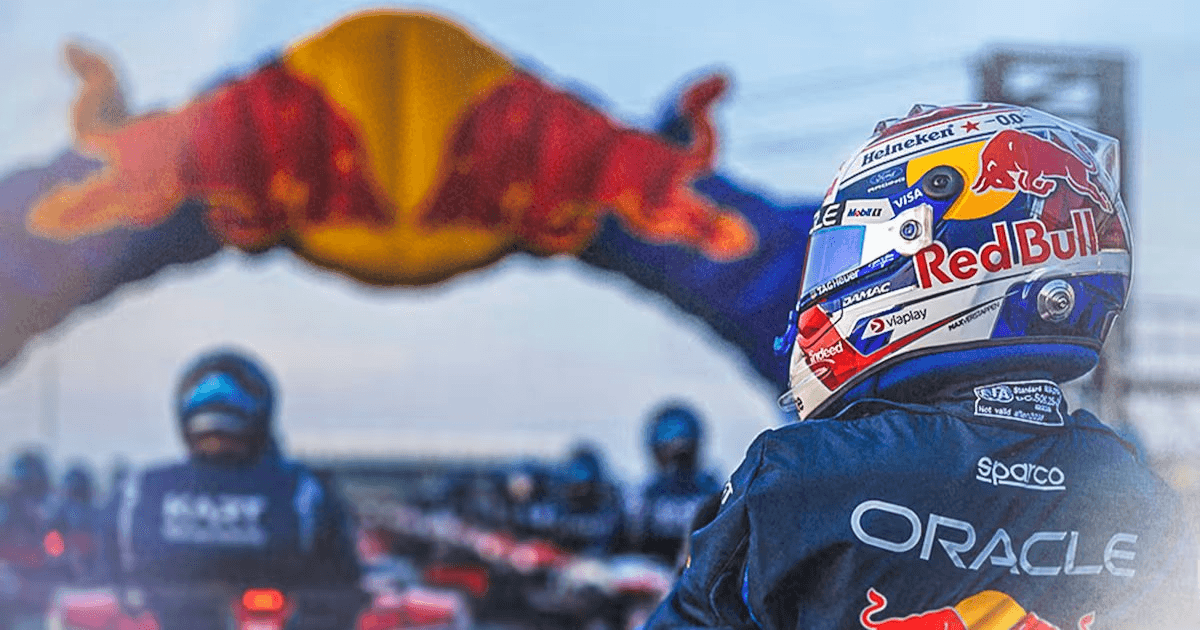
At Silverstone, Max Verstappen started last on a grid of 101 karts.
Ahead of him were a hundred rivals. Content creators, streamers, Red Bull athletes and players, and anonymous fans from all over the world. The rule was simple: every time Max overtook someone, that someone was instantly eliminated.
He passed 64 karts on the first lap.
His radio on that lap sums it up better than any race report. I have no idea what's going on. This is a bloodbath.
Thirty laps were planned. He finished in just over half the allotted time, broadcast live to the entire planet by ESPN on Disney+.
Everyone is going to talk about the race. What interests me is what's underneath.
What you don't see
People keep repeating that when a brand has its story well built, the campaigns just happen on their own.
It's not true. None of this happened on its own.
They built a new kart track inside the Silverstone grounds. They manufactured 101 karts. They closed a global distribution deal with Disney. They ran a casting for a hundred people with their own audiences and coordinated them for weeks. And before all of that, they tested the circuit with a sim racer, a two-time iRacing world champion, who rehearsed it with fifty karts and warned that with a hundred it was going to be brutal.
That's not spontaneity. It's heavy, expensive production with months of work behind it.
What a well-built strategy does is something else, and it's worth more than spontaneity: it removes the question of whether it fits.
Nobody at Red Bull had to justify internally why an energy drink brand is staging the biggest kart race in history. That answer has been written for twenty years.
And that's where the real difference lies. In a brand without a resolved narrative, an idea like this dies in the third meeting. Not because it's bad, but because nobody knows how to defend it. Someone asks for a study, someone asks for validation, someone asks for a smaller version. And by the time it's approved, it's nothing anymore.
When the narrative is resolved, the team's energy isn't spent defending the idea. It's spent executing it well.
That's the only thing that happens on its own.
The format is the product
Here's the design decision that holds everything else up, and I think it's the most interesting one of all.
One against a hundred is not a motorsport format. It's a video game format.
Instant elimination. A single possible survivor. The best in the world forced to start from the back, with a handicap designed so the comeback becomes the spectacle.
It's a battle royale with a petrol engine.
That's why it hooks people who don't watch Formula 1 and have no intention of watching it. They already know the grammar from somewhere else. You don't need to understand tyre strategy or pit stops. You only need to understand that ninety-seven remain, and then ninety-six.
And they added one more layer. The rivals could use a shortcut during the race. Max had his taken away. And the top four got an extra one to try to hold him back.
That's not sport. It's tension design.
Someone sat down to work out how to keep the race from being boring, because the result was predictable from minute zero. Nobody doubted who was going to win.
The fun was never who won. It was how long it took.
When you accept that you can't control the outcome, you can design the journey. That's product work, not sponsorship work.
The casting is strategy too
One detail that gets overlooked: they weren't just YouTubers.
There were creators, yes. But also athletes from the house, players, streamers, and ordinary fans from all over the world who earned a slot.
A hundred people with a hundred audiences of their own, each telling their version of the story in the days leading up to it. The communications campaign wasn't done by an agency. It was done by a hundred people with a real incentive to tell it well, because they were in it.
And among them, people with no audience at all.
That last part is what turns the event into something you can identify with rather than a celebrity showcase. If every rival is famous, the story is about them. If there are anonymous fans on the grid, the story is about anyone.
The podium sealed it without anyone planning it. Behind Verstappen were a Dutch journalist and a Red Bull Powertrains engineer. The fastest YouTuber finished fourth.
Nobody designed that ending. But it fits perfectly with the story the brand has been telling since forever.
They didn't buy the space, they built it
This is the part that interests me most.
Red Bull didn't buy advertising inside a sports broadcast. It created the content the platform distributes.
It's the difference between renting attention and manufacturing it.
I've spent a month writing about forty-year-old brand objects, and the mechanism is exactly the same. Coca-Cola didn't buy a slot on the terraces of Spanish bars. It manufactured the whole terrace. The tables, the chairs, the umbrella.
Red Bull doesn't buy a slot in sport. It manufactures the sport.
It doesn't sponsor Formula 1 teams, it owns two. It doesn't sponsor football clubs, it bought them and put its name on them. It didn't advertise a jump from the stratosphere, it organised one. It has its own production company that has spent fifteen years generating the content others would pay to sponsor.
It's a media company that also sells cans.
And when you take that model to the extreme, something strange happens. The brand stops needing to interrupt anyone. People come looking for it.
What this doesn't mean
A warning, because the easy reading is dangerous and tomorrow half of LinkedIn is going to be saying you just have to dare.
This doesn't work because the format is brilliant. It works because Red Bull has spent two decades earning the right to do it.
A brand without that track record copying the format tomorrow gets nothing. It gets an expensive event that nobody understands why it exists. And probably an internal argument about return on investment that will never be resolved.
Consistency isn't improvised in an activation. It accumulates.
What today looks like a brilliant idea is actually the compound interest of twenty years of decisions pointing in the same direction. Every jump, every team, every weird event has been adding to the same account.
That's the uncomfortable part for anyone who wants results this quarter.
What you can copy
Not the scale. Not the budget. Not the Disney deal.
The question.
Before every action, Red Bull can answer without hesitation why that action is theirs and nobody else's. Not because they have a very pretty brand manual, but because they've spent twenty years making decisions that point the same way.
That capacity is built from day one, and it costs the same to have it as not to have it. What changes is where you end up.
If everything you publish, launch or sign this year could answer that question, in ten years you'd have something similar.
And if not, you'll have ten years of loose actions that add up to nothing.
You can't see the difference today. You see it when someone proposes an impossible idea and your whole organisation knows, without discussing it, that it's exactly what you have to do.
If you haven't watched the race yet, don't miss it:
 XMax Verstappen vs 100 — Highlights